 Skip-the-line available
 The Best Time to Visit El Escorial: Months, Days and Hours
Sierra de Guadarrama weather, the weekly crowd rhythm, the Wednesday/Sunday free window, and the quietest hours to walk in.
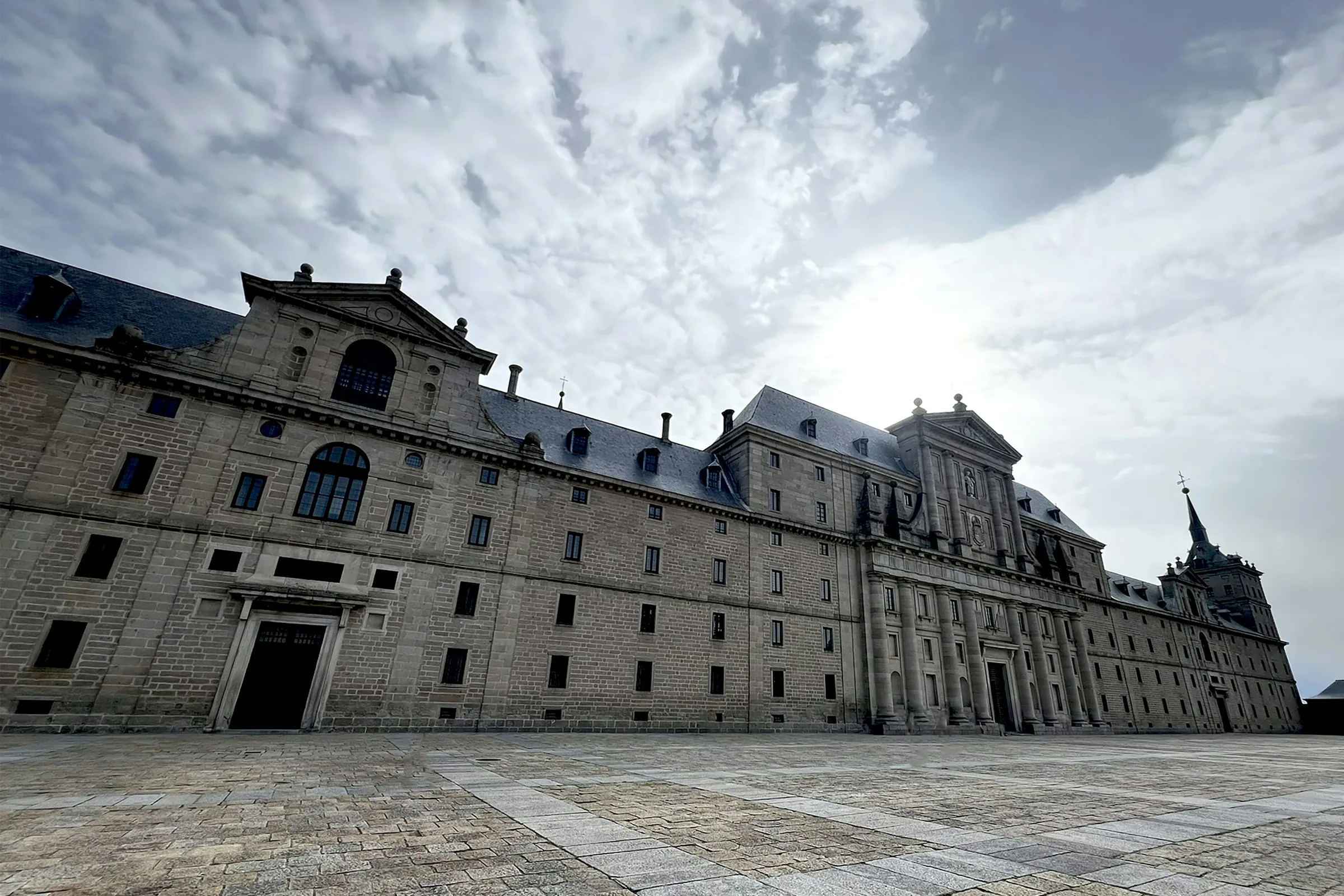
El Escorial sits at roughly 1,030 metres in the granite foothills of the Sierra de Guadarrama, which is the single fact that governs when to come. The altitude keeps the monastery 5–7°C cooler than central Madrid — a relief in July, a reason to pack a coat in January. The Royal Monastery is open Tuesday through Sunday and closed every Monday of the year, and the daily flow has two distinct waves: a morning surge of day-trip groups off the first Cercanías trains from Madrid, and an afternoon wave that merges, on Wednesdays and Sundays, with the on-site queue for the free-entry passes. This guide breaks down the best month, the calmest day, and the exact hours to target so you stand in the Pantheon of the Kings without a tour group at your shoulder.
Month by month at mountain altitude
April, May, September and early October are the sweet spot. The weather at El Escorial's altitude is warm but rarely hot in those months, the summer opening hours run later, and crowds — while real — have not yet hit the July–August ceiling. Spring brings the Sierra de Guadarrama into green and the granite reads warmest in the long light; autumn delivers clear, stable days after the August heat breaks. These shoulder months also avoid the Spanish domestic-holiday surges that pile onto the international baseline at Easter and in high summer.
July and August are the hottest months in Madrid, but the mountain elevation keeps El Escorial noticeably cooler — many madrileños come up here precisely to escape the city heat, so weekends feel busy even as the air stays bearable. Winter (roughly November to March) is the quietest stretch of the year. The monastery is occasionally snow-dusted, which is striking against the grey granite, but the unheated stone interiors run cold and the days are short. Bring a proper coat in winter and a layer in spring or autumn; the mountain weather can change quickly, and an umbrella is sensible from October to April.
The weekly rhythm
El Escorial is closed Mondays year-round, which compresses the week's visitors into six days and makes Tuesday the natural reset — Tuesday, Wednesday and Thursday outside July and August are the calmest single days. Weekends draw both international visitors and Madrid day-trippers, and Sundays carry an extra wrinkle: the Basilica is an active Catholic church, so Sunday-morning religious services can limit access to that part of the route. If your trip is flexible, aim for a midweek visit and you will share the granite courtyards with far fewer coaches.
Spanish public holidays stack domestic pressure on top of the usual flow. The long weekends around 6 January (Epiphany), Easter Week, 1 May, 12 October (Hispanic Day) and 6 December (Constitution Day) all bring heavier crowds. Note that several of those dates are also full closures: the monastery shuts on 1 January, 6 January, 1 May, 10 August (Saint Lawrence's feast, the monastery's patronal day), 24 December afternoon, 25 December and 31 December afternoon. Check the calendar before you commit to a date so a public holiday does not turn out to be a locked door.
The Wednesday and Sunday free window
Patrimonio Nacional, which manages the Royal Sites of Spain, offers free admission to El Escorial every Wednesday and Sunday afternoon — 15:00 to 18:00 in winter (October–March) and 15:00 to 19:00 in summer (April–September). The free entry is restricted to EU citizens, EU residents and citizens of Ibero-American countries, with ID required at the gate. Those afternoons are, paradoxically, the single busiest window of the week: the free passes are pickup-only at the on-site visitor centre on the day, on a first-come basis, with a daily cap that frequently sells out before the window even opens.
Queues for the free passes typically build from mid-morning on Wednesdays and Sundays and have been reported at well over an hour during summer weekends. If you qualify and are happy to queue, arrive at the visitor centre at least 90 minutes before the free window opens to be safe. Non-EU visitors — from the US, Canada, UK, Australia, Japan, China and elsewhere — do not qualify and should book a normal timed ticket regardless of the day. And anyone who wants to pair the visit with an afternoon Royal Palace slot in Madrid is better served by a timed entry: standing in the free-pass queue can swallow the whole afternoon.
The quietest hours to walk in
The two calmest windows on any given day are the first hour after opening (10:00) and the last 90 minutes before close, on a non-summer weekday outside the free-entry afternoons. The morning wave starts as day-trip groups arrive on the first Cercanías trains and peaks around midday before partially clearing when groups break for lunch in the town of San Lorenzo; the early slot lets you reach the headline rooms before that surge lands. A 9:30–10:00 arrival regularly means having the Hall of Battles and the Pantheon nearly to yourself.
Even within a busy day, the rooms are not uniformly crowded. The Royal Library corridor and the Pantheon of Princes are consistently quieter than the Basilica and the Royal Pantheon of the Kings, because most groups concentrate on the two headline spaces and rush the rest. If you arrive mid-afternoon on a busy day, work against the flow — start with the Library and the Chapter Houses while the crowd clusters around the Pantheon, then circle back. A timed skip-the-line ticket removes the entrance queue entirely, so the only crowd you manage is inside, where you can simply wait two minutes for a group to move on.
Frequently asked
What is the best month to visit El Escorial?
April, May, September and early October offer the best balance: warm-but-not-hot weather at the mountain altitude, longer opening hours, and crowds that are heavy but below the July–August peak.
Is El Escorial cooler than Madrid in summer?
Yes. At roughly 1,030 m in the Sierra de Guadarrama, El Escorial runs about 5–7°C cooler than central Madrid, which is why many madrileños come up here to escape the summer heat.
What day of the week is quietest at El Escorial?
Tuesday, Wednesday and Thursday outside July and August are the calmest days. The monastery is closed every Monday year-round, and weekends draw both tourists and Madrid day-trippers.
Does the Wednesday and Sunday free entry make it more crowded?
Yes. The free afternoon (15:00–18:00 winter, 15:00–19:00 summer, for EU/EU-resident/Ibero-American visitors) is the busiest window of the week because the free passes are pickup-only on-site, on a first-come basis, with a daily cap that often sells out.
What are the quietest hours inside El Escorial?
The first hour after the 10:00 opening and the last 90 minutes before closing, on a non-summer weekday outside the free-entry afternoons. Arriving at opening lets you reach the Pantheon before the day-trip groups.
When is El Escorial closed?
Closed every Monday year-round, plus 1 January, 6 January, 1 May, 10 August (Saint Lawrence's feast day), 24 December afternoon, 25 December and 31 December afternoon.
Should I avoid Sunday mornings?
Sunday-morning religious services in the Basilica — an active Catholic church — can limit access to that part of the route. A midweek morning or a Sunday afternoon avoids the issue.