 Skip-the-line available
 How to Get to El Escorial from Madrid
Cercanías C-3 train from Atocha or Chamartín, the Herranz 661/664 bus from Moncloa, driving and parking, and journey times.
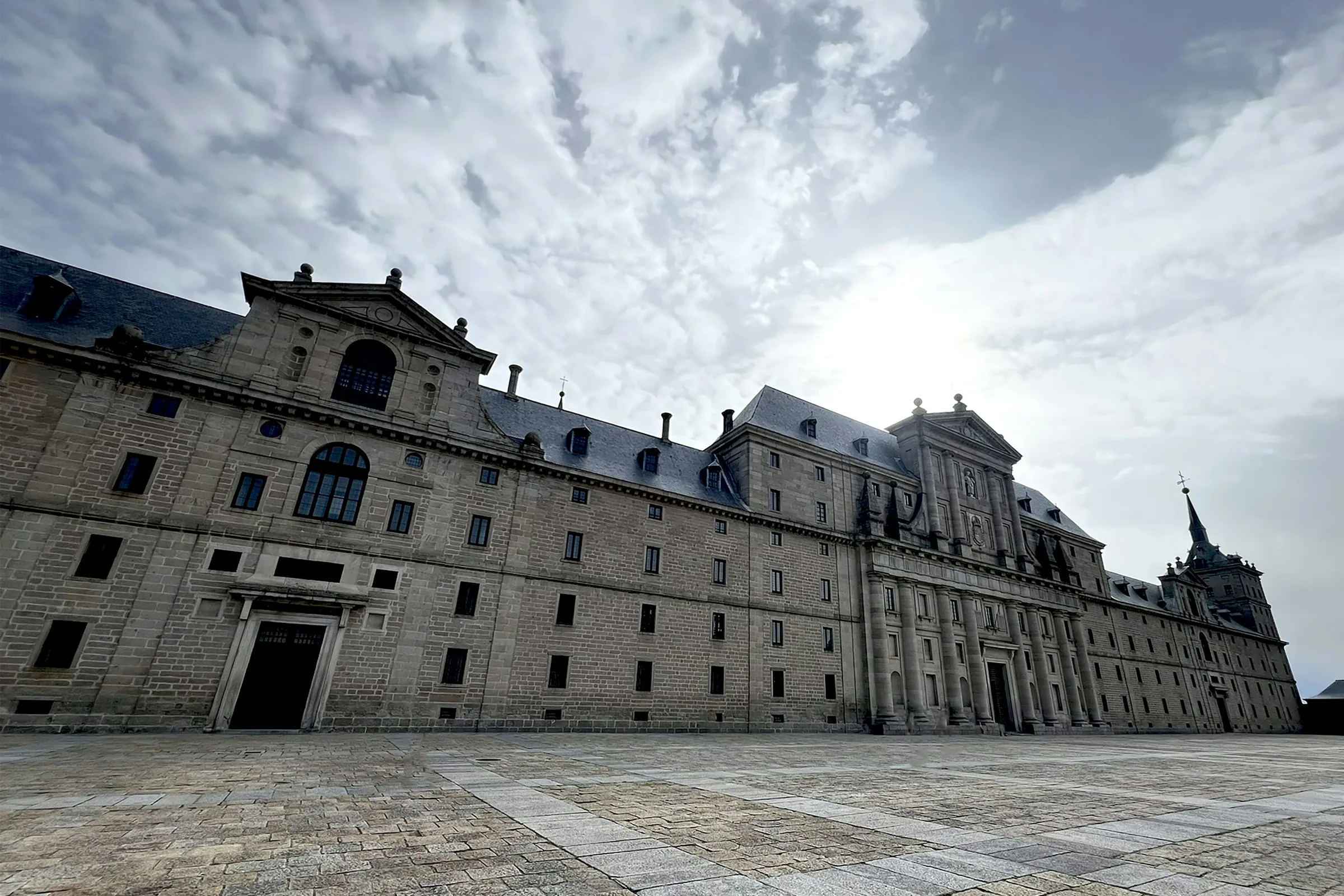
El Escorial sits about 40 km northwest of central Madrid, in the Sierra de Guadarrama foothills, and it is one of the easiest major day trips to reach by public transport. There are three sensible routes — the Cercanías suburban train, the Herranz coach from Moncloa, or your own car on the A-6 motorway — and the right choice depends on where you are staying and whether you want to be dropped at the monastery door or fancy the short uphill walk through the gardens. None of the three takes much over an hour. This guide lays out each option, the journey time, the final climb from the station to the monastery, and how to chain the trip onward to Segovia or the Royal Palace in Madrid.
By Cercanías train (the default)
The Cercanías Renfe suburban train is the workhorse route. Line C-3 runs from Madrid Atocha via Sol and Chamartín out to El Escorial station; line C-8 reaches the same station from Príncipe Pío. The ride takes roughly 50–60 minutes, with departures about every 30 minutes through most of the day. Trains are air-conditioned and reliable — a meaningful advantage on the return leg, when the A-6 motorway can clog with rush-hour traffic. Buy tickets at the station machines or via the Renfe Cercanías app; the standard zone-fare for the Madrid–El Escorial leg is modest.
One thing to plan for: El Escorial station sits below the town, so arriving by train leaves a final climb to the monastery. It is a 10-minute uphill walk through the gardens, or a short ride on local bus L4, which meets the trains and runs up to the centre in about five minutes. If you are travelling with reduced mobility or small children, the L4 bus is the easier choice. The Madrid Tourist Travel Pass (Abono Turístico) covers Cercanías within the Comunidad de Madrid zones and is worth considering if you will take more than one Cercanías trip during your stay.
By Herranz bus from Moncloa
The alternative public-transport route is the Autobuses Herranz coach — lines 661 and 664 — from the Moncloa interchange in Madrid. The bus runs door-to-door in roughly 50–60 minutes and, crucially, drops you closer to the monastery entrance than the train does, sparing you the climb from the station. The trade-off is frequency: the coach departs less often than the half-hourly Cercanías, so check the timetable before you rely on it, especially for the return.
Moncloa is itself a Metro interchange (lines 3 and 6) with an underground bus station, so the Herranz coach is convenient if you are staying in the west or north-west of central Madrid. The 661 and 664 follow slightly different routings through the area but both terminate at San Lorenzo de El Escorial near the monastery. On a Wednesday or Sunday — when the free-entry afternoon draws crowds — the bus can fill, so arrive at the Moncloa stand with a little time in hand rather than counting on the next departure.
By car and parking
Driving from Madrid, take the A-6 motorway northwest and branch off toward San Lorenzo de El Escorial; the trip is about 45 minutes outside rush hour, longer if you hit the morning or evening peak on the A-6. A car makes sense if you plan to combine the monastery with the Silla de Felipe II viewpoint or the Valle de Cuelgamuros to the north, both of which are awkward without your own wheels.
The closest paid car park to the monastery is on Calle Floridablanca, about 200 metres from the visitor entrance. The town of San Lorenzo also has on-street and lot parking, but spaces near the monument fill on busy weekends and during the free-entry afternoons, so arrive early. If you are coming only for the monastery and staying in central Madrid, the train is usually the lower-stress choice — no parking hunt, no rush-hour return crawl — but the car wins decisively for a multi-stop day in the Sierra.
Chaining the trip onward
El Escorial pairs neatly with other stops if you plan the sequence. To combine it with the Royal Palace (Palacio Real) in Madrid, do El Escorial in the morning, take the Cercanías back by mid-afternoon, and book a late-afternoon timed slot at the Palace — the two monuments share the same operator, Patrimonio Nacional, and the same QR-scanning infrastructure. Allow at least an hour between the two for the train transfer and a quick lunch.
If you are continuing into the wider region, the cleanest route to Segovia or La Granja de San Ildefonso is back to Madrid Chamartín and onward on the AVE high-speed train, which reaches Segovia-Guiomar in about 25 minutes — far faster than trying to cross the mountains directly. For most visitors, though, El Escorial is a self-contained half- to full-day from Madrid: out on the morning train, the monastery and a roast-lamb lunch in town, and back to the city by late afternoon.
Frequently asked
What is the easiest way to get to El Escorial from Madrid?
The Cercanías Renfe train (line C-3 from Atocha via Chamartín, or C-8 from Príncipe Pío) to El Escorial station — about 50–60 minutes, departures roughly every 30 minutes — then a 10-minute uphill walk or local bus L4 to the monastery.
How long does the train from Madrid to El Escorial take?
Roughly 50–60 minutes on the Cercanías C-3 or C-8 line. Trains run about every 30 minutes through most of the day and are air-conditioned.
Which bus goes from Madrid to El Escorial?
The Autobuses Herranz coach, lines 661 and 664, from the Moncloa interchange. It takes about 50–60 minutes and drops you closer to the monastery entrance than the train, but runs less frequently.
Do I have to walk up from El Escorial station?
The station sits below the town, so arriving by train leaves a 10-minute uphill walk through the gardens — or a five-minute ride on local bus L4, which meets the trains.
How long does it take to drive from Madrid to El Escorial?
About 45 minutes on the A-6 motorway outside rush hour. The closest paid car park is on Calle Floridablanca, around 200 m from the visitor entrance.
Can I get to Segovia from El Escorial?
The cleanest route is back to Madrid Chamartín, then the AVE high-speed train to Segovia-Guiomar in about 25 minutes — faster than crossing the Sierra de Guadarrama directly.
Is there a travel pass that covers the journey?
The Madrid Tourist Travel Pass (Abono Turístico) covers Cercanías trains within the Comunidad de Madrid zones, which is worth considering if you make more than one Cercanías trip during your stay.