 Skip-the-line available
 The Perfect El Escorial Day Trip from Madrid
How to build a full day around the monastery, the town, the Silla de Felipe II viewpoint, lunch, and how long you actually need.
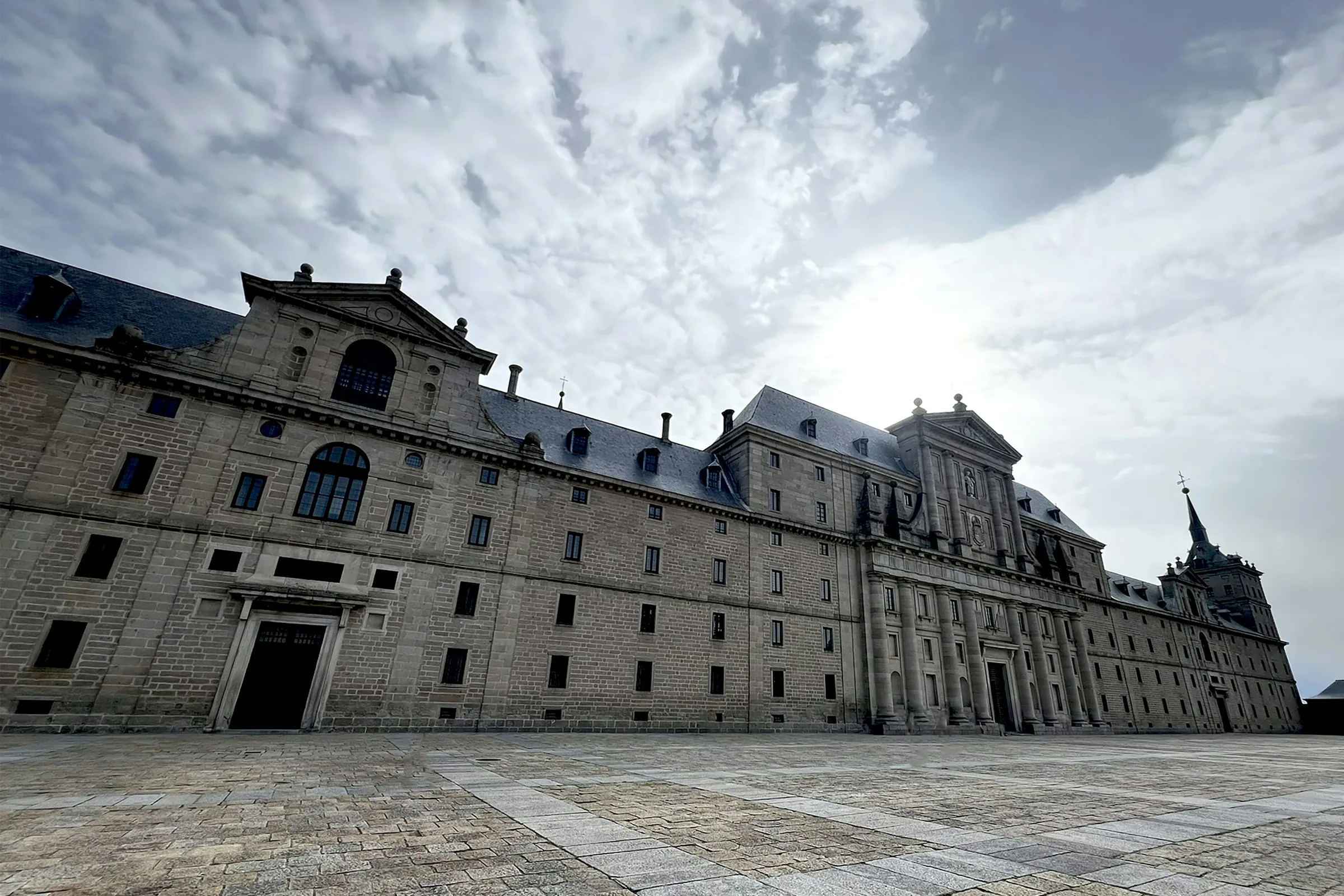
El Escorial is the most rewarding single day trip from Madrid for anyone with an interest in history, architecture or simply escaping the city heat. The monastery alone is a two-to-three-hour visit, but the town of San Lorenzo around it, the viewpoint where Philip II watched his palace rise, and the wood-fired roast-lamb tradition of the Castilian meseta turn it into a full and very satisfying day. With a 50–60 minute train each way and a half-hourly Cercanías service, you can be back in Madrid for dinner with time to spare. This guide lays out the itinerary — monastery first, lunch in town, the Silla de Felipe II for the best view — plus how to handle the closures and exactly how long you need.
The shape of the day
The classic sequence is monastery in the morning, lunch in town, optional viewpoint or onward stop in the afternoon. Take an early Cercanías C-3 from Atocha or Chamartín — about 50–60 minutes to El Escorial station, then a 10-minute uphill walk or the L4 bus — and aim to be at the monastery for the 10:00 opening. Arriving early matters: the day-trip groups land mid-morning, and a 10:00 start lets you reach the Pantheon and the Hall of Battles before the crowd. Budget 90 minutes to three hours inside depending on your appetite for Habsburg history.
Remember the monastery is closed every Monday year-round, so build the trip around Tuesday-to-Sunday. If you come on a Wednesday or Sunday and qualify for the EU/Ibero-American free afternoon, be aware the on-site free-pass queue is the busiest window of the week; a timed ticket sidesteps it entirely. After the monastery, the town is right there for lunch, and the afternoon is yours for the viewpoint, the gardens, or the train back to Madrid — comfortably home by early evening.
The town of San Lorenzo and where to eat
The town of San Lorenzo de El Escorial wraps directly around the monastery, and its streets to the north and east are full of restaurants — from informal tapas bars to traditional Castilian asadores, the wood-fired roasting houses that are the region's culinary signature. The dish to order is cordero asado (roast lamb) or cochinillo (suckling pig) from a wood-fired clay oven, a meseta speciality that rewards a slow, unhurried lunch after a morning on your feet.
Two long-standing, family-run names sit within a five-minute walk of the monastery: Charolés, on Calle Floridablanca, the more refined and pricier of the pair, known for its cocido stew on certain days; and Mesón La Cueva, on Calle San Antón, the more atmospheric, with an eighteenth-century cellar dining room. Both are reliable for the traditional roasts. There is also a small café-cafeteria inside the monastery's visitor area for a quick drink or snack, but for a proper sit-down meal the town is where you want to be — and it is a pleasant place simply to wander between courses of granite plazas and arcaded streets.
The Silla de Felipe II and the best view
The single best exterior view of El Escorial is from the Silla de Felipe II — Philip II's Seat — a rocky outcrop in the hills about 3 km southwest of the monastery, traditionally said to be where the king sat to watch construction progress. From the Silla the whole granite mass of the monastery spreads out against the backdrop of the Sierra de Guadarrama, and on a clear day the view reaches far across the meseta. It is the iconic photograph of the complex, and it is at its most dramatic at sunrise, when the granite catches the first eastern light.
You can reach the Silla by car in a few minutes, or on foot via a low-to-medium-difficulty trail through Mediterranean forest and stone paths that climbs gradually with widening views of the monastery as you ascend; allow roughly 90 minutes for the round walk from the town centre, more at a relaxed pace. It is the perfect afternoon add-on for a clear day. If the weather has closed in — the mountain conditions change quickly — save it for another visit and head back to the train instead.
Combining with nearby sites
If you have energy after the monastery, a few extensions pair naturally. The Casita del Príncipe and Casita del Infante — two small late-eighteenth-century neoclassical retreats built by the architect Juan de Villanueva in the wooded grounds north of the monastery — are separate Patrimonio Nacional tickets, open seasonally, and worth a half-day for visitors keen on Spanish neoclassical interiors; most first-timers skip them. The Valle de Cuelgamuros (formerly the Valley of the Fallen), about 13 km north, is a vast twentieth-century basilica cut into the granite of the Cuelgamuros valley — controversial in Spanish memory, recently re-presented by the operator, and reachable by car.
Back toward Madrid, the trip combines well with the Royal Palace (Palacio Real): do El Escorial in the morning, take the Cercanías back by mid-afternoon, and book a late-afternoon timed slot at the Palace, which shares the same operator. For a different second half, the AVE high-speed train from Madrid Chamartín reaches Segovia in about 25 minutes, unlocking that UNESCO city for a half-day. But you do not need to add anything: the monastery, a roast-lamb lunch in town and the walk up to the Silla make a complete and unhurried day on their own.
How long you need
For the monastery alone, plan 90 minutes minimum for the standard self-guided route through the Basilica, Pantheon, Library, Chapter Houses and Royal Apartments; two hours at an attentive pace; and 2.5–3 hours if you are an enthusiast for Habsburg history or the painting collection. Add an hour for the journey each way and a relaxed lunch, and the monastery plus town is a comfortable half-day to full day from Madrid.
If you want the complete experience — monastery, an unhurried meseta lunch, and the walk up to the Silla de Felipe II for the view — give yourself the full day: out on an early train, back by early evening. That is the version most visitors remember best. The one thing not to do is rush the monastery to a single hour: the Pantheon and the Library in particular reward standing still, and the whole point of a skip-the-line timed ticket is that the time you save at the entrance goes into the rooms, not the queue.
Frequently asked
Is El Escorial worth a day trip from Madrid?
Yes — it is the most rewarding single day trip from Madrid for history and architecture lovers. The monastery is a two-to-three-hour visit, and the town, the roast-lamb tradition and the Silla de Felipe II viewpoint round it into a full day.
How long do I need for an El Escorial day trip?
Plan 90 minutes to three hours inside the monastery, plus an hour each way and lunch. The monastery and town make a comfortable half-day to full day; adding the Silla de Felipe II viewpoint fills a full day.
Where should I eat in San Lorenzo de El Escorial?
The town is full of Castilian asadores serving wood-fired roast lamb and suckling pig. Charolés on Calle Floridablanca and Mesón La Cueva on Calle San Antón are two long-standing, family-run names within a five-minute walk of the monastery.
What is the Silla de Felipe II?
A rocky outcrop about 3 km southwest of the monastery, said to be where Philip II sat to watch construction. It gives the best exterior view of El Escorial against the Sierra de Guadarrama, reachable by car or a moderate roughly 90-minute round walk.
Can I visit the Valle de Cuelgamuros on the same day?
Yes, with a car. The Valle de Cuelgamuros (formerly the Valley of the Fallen), about 13 km north of El Escorial, is a separate Patrimonio Nacional site and a worthwhile add-on for visitors with a half-day to spare.
Can I combine El Escorial with the Royal Palace in Madrid?
Yes. Do El Escorial in the morning, take the Cercanías back by mid-afternoon, and book a late-afternoon timed slot at the Royal Palace — both are run by the same operator. Allow at least an hour between the two.
What day should I avoid for the day trip?
Monday — the monastery is closed all year. Sunday mornings can have limited Basilica access during services, and the Wednesday/Sunday free afternoon is the busiest on-site queue of the week.